
Kasa Trekking & Safaris
Northern Tanzania Safaris
Many sources have selected Tanzania as the best safari destination in the world. It has two of the most renowned safari destinations in the world - Serengeti National Park, and Ngorongoro Crater. Both are designated UNESCO World Heritage Sites. Since Mt Kilimanjaro is also located in norhtern Tanzania, it is very possible to experience a Mt Kilimanjaro trek and a safari visiting one or both of these destinations in a single holiday trip. There are other excellent wildlife safari destinations also nearby - Tarangire National Park, Lake Manyara National Park, and Arusha National Park. From Moshi or Arusha, you can have a wonderful safari experience in as little as one day. Or you can opt for a several days safari. You would not find yourself bored even on a 2 weeks itinerary.
In this website we will give you a sample of what is possible. But it is by no means the end of the possibilities. The tour experts at Kasa Trekking & Safaris will be happy to work with you to create a custom itinerary to fit your desires and budget.
Northern Tanzania Safari Destinations
Click on the destination to view the description:
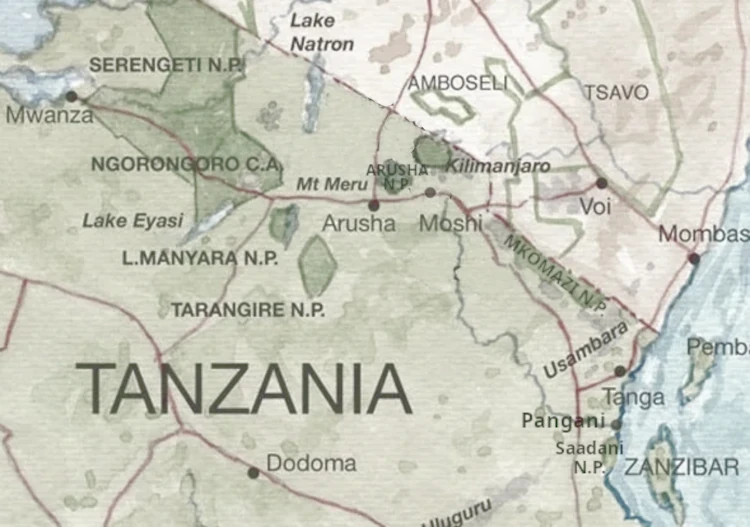
Serengeti National Park
The oldest national park in Tanzania, the word Serengeti is derived from the Maasai word meaning "endless plain". Often it seems that places so famous lead to expectations so high that leads to a bit of disappointment. That is not the case with the Serengeti. It indeed deserves all its reputation. No matter what time of the year you go, there will be excellent game viewing. The park is quite large. From north to south is approximately 160 km (100 miles) and covers nearly 15,000 sq. km (5,700 sq. miles). With the neighboring protected areas not officially part of the park it covers more than 30,000 sq. km (12,000 sq. miles). By comparison, Kenya's Maasai Mara covers just 1,510 sq. km. Even in the busiest times, it is easy to find secluded areas in the Serengeti for game drives if you desire the solitude, let us know.
Certain portions of the Serengeti are at their best at specific times of the year due to the presence of the Great Migration. Central Serengeti (Seronera) is a reliable option year round. Northern Serengeti (Kogatende) is spectacular during the months of July - October when the Great Migration herds are present. Other months there is also good animal viewing, but not worth traveling several hours further to reach there when the same experience can be found in closer portions of the Serengeti. Kogatende is the location of the Mara River, where the wildebeest cross to reach fresh grazing land. The timing of the crossing is dependent on the rains so it is a little unpredictable. But during the July - October time period it is highly likely that there will be a huge number of migrating wildebeest, zebra, and antelope. Usually during the month of May, the migration herds are passing though what is called the "Western Corridor", a portion of the Serengeti that extends westward. Here the migration encounters the Grumeti River. This is not as spectacular as the Mara River crossing since the Grumeti is not continuous and herds can find alternatives to swimming through the river (but there are plenty of crocodiles for any that try to make its way across). The huge number of animals during the Month of May - June does make for excellent game viewing regardless. During the months of January - March, the migration herds are in the southern Serengeti in an area named Ndutu which straddles the Serengeti and Ngorongoro Conservation Area. They stay here gathering strength and waiting for the wildebeest to give birth. When conditions are right, in a 3 week period, over 400,000 calves will be born. This is a very active time for predators. Within a few minutes after birth, wildebeest calves are not only standing up, but are able to run.
The Serengeti is one of the few remaining places where it is possible to see black rhino in the wild. The park is also known for its numerous cats. Lions, cheetahs, and leopards are the big cats, with caracals, servals, and wild cats being smaller. You can find elephants, giraffes, zebras, various antelopes, warthogs, hyenas, jackals, buffaloes, ostriches, crocodiles, pythons, black mambas, among numerous other animals.
The most used way to get to the Serengeti is to drive across Ngorongoro Conservation Area (but not through the crater). From Arusha this is about a 7 hours drive. Although there are some animals there, the game viewing along the way is not the best. Another way to drive would be to go up near Lake Natron near the Kenyan border then into the Lobo portion of Serengeti (northeastern Serengeti). There is some cultural tourism here and Lake Natron and Ol Doinyo Lengai (an active volcano) are close to this area. This drive takes about 9 hours from Arusha, but would be best to stop near Lake Natron for overnight and some walking tours/cultural tourism. Don't expect much wildlife viewing along the way. Flying into/out of the Serengeti is an option worth considering. There are several airstrips inside of the park. The planes used are small (usually with seating capacity of 18 - 20 passengers) and luggage is restricted to 15kg (including carry-on). But into central Serengeti (Seronera) there is a larger plane run by Precision Air that allows 1 bag of 23kg weight. Precision Air also flies between Seronera and Zanzibar a few times a week at a very good price.
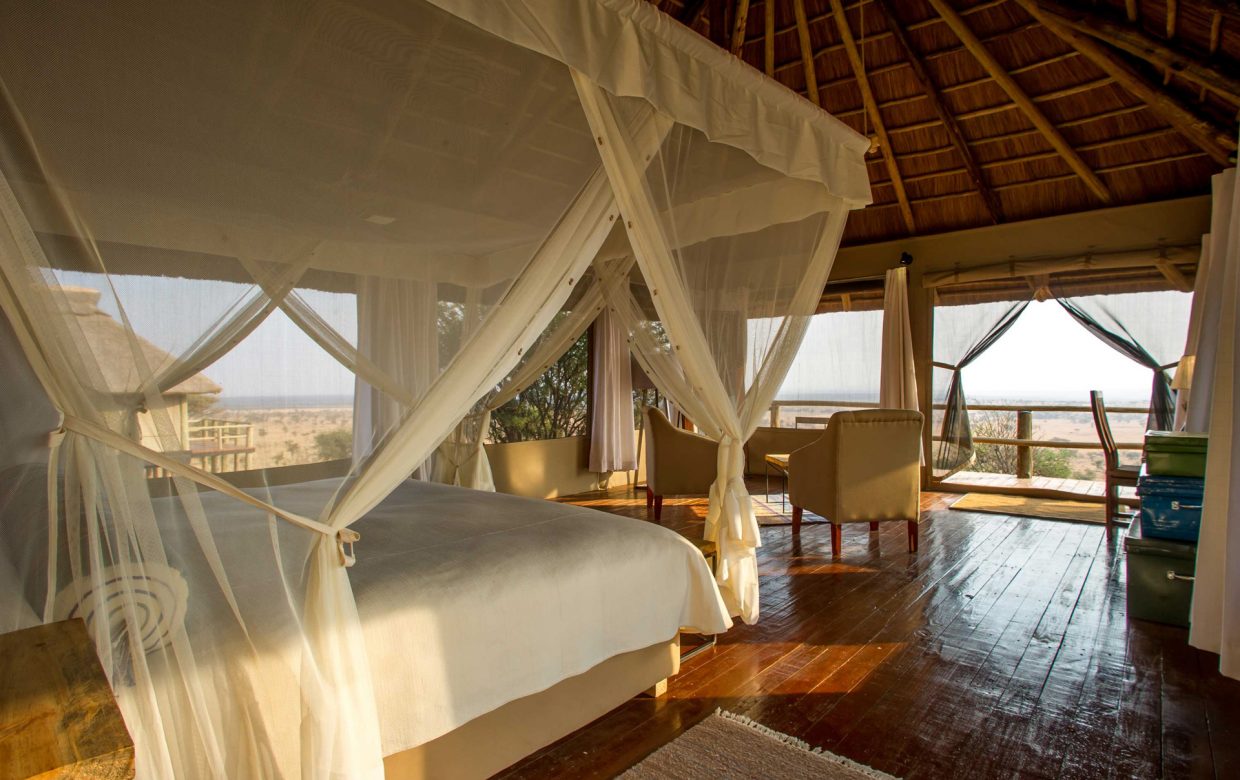
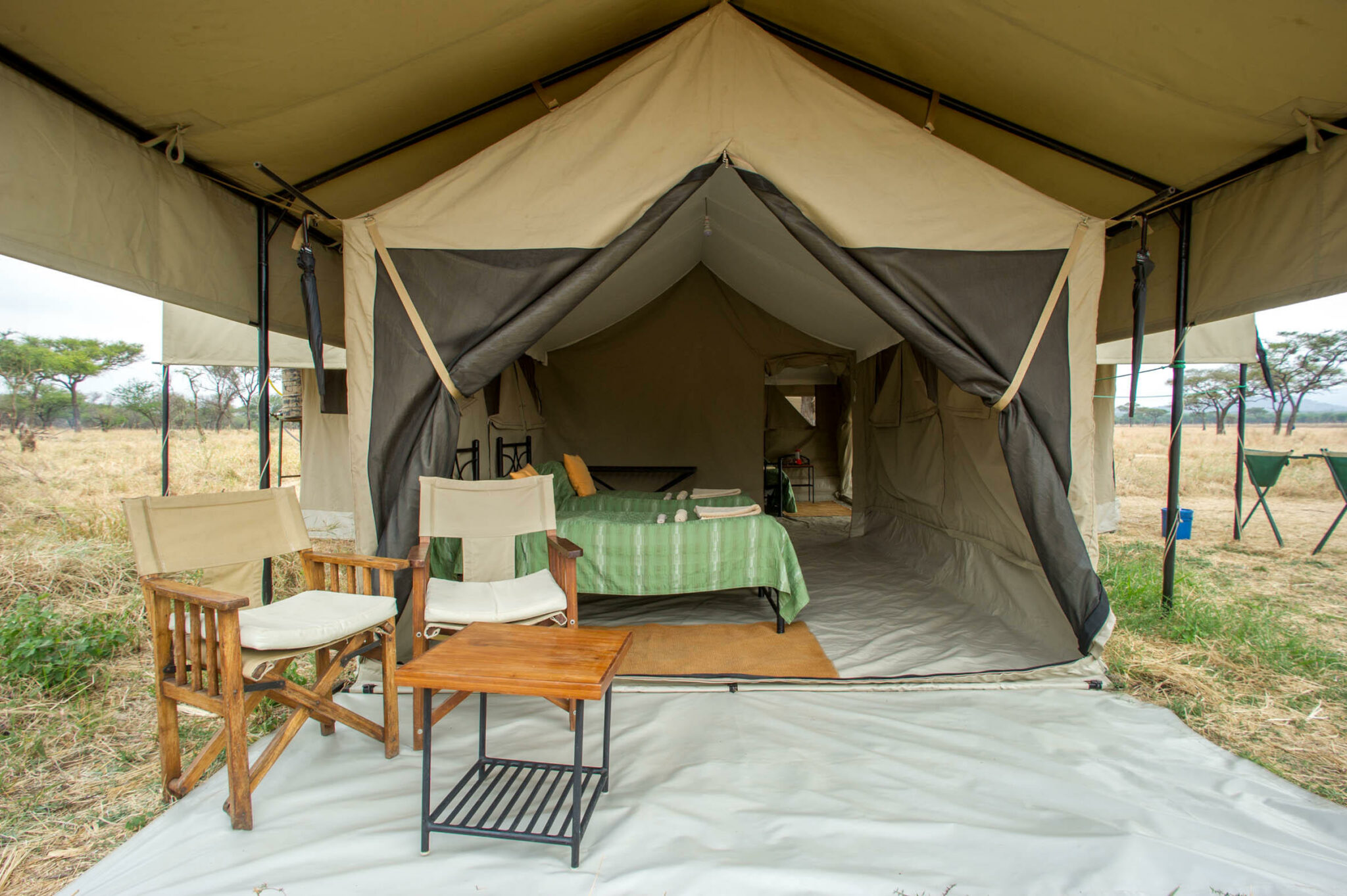
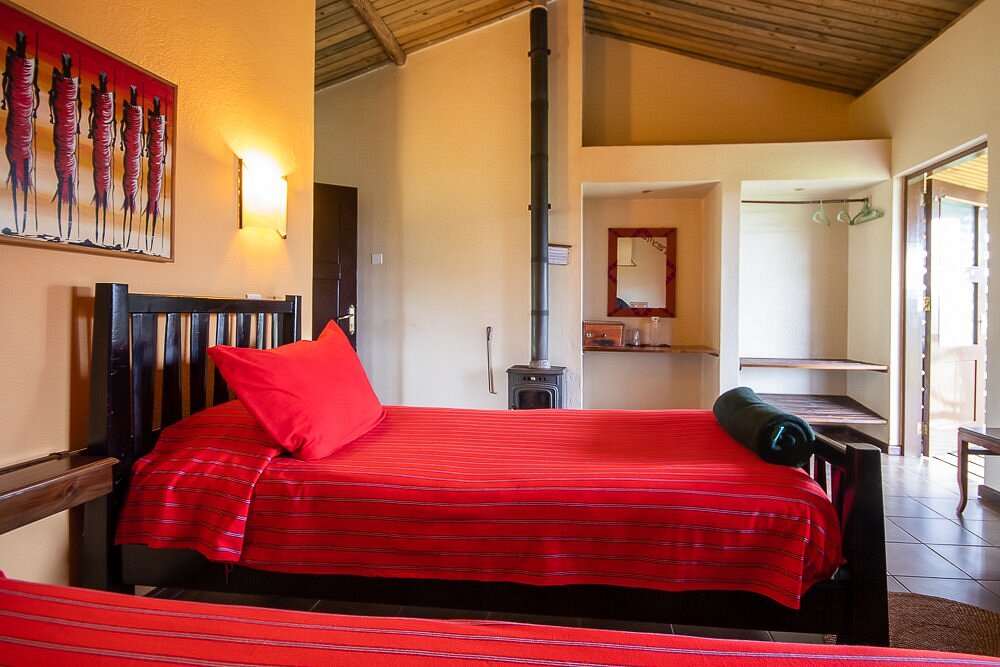
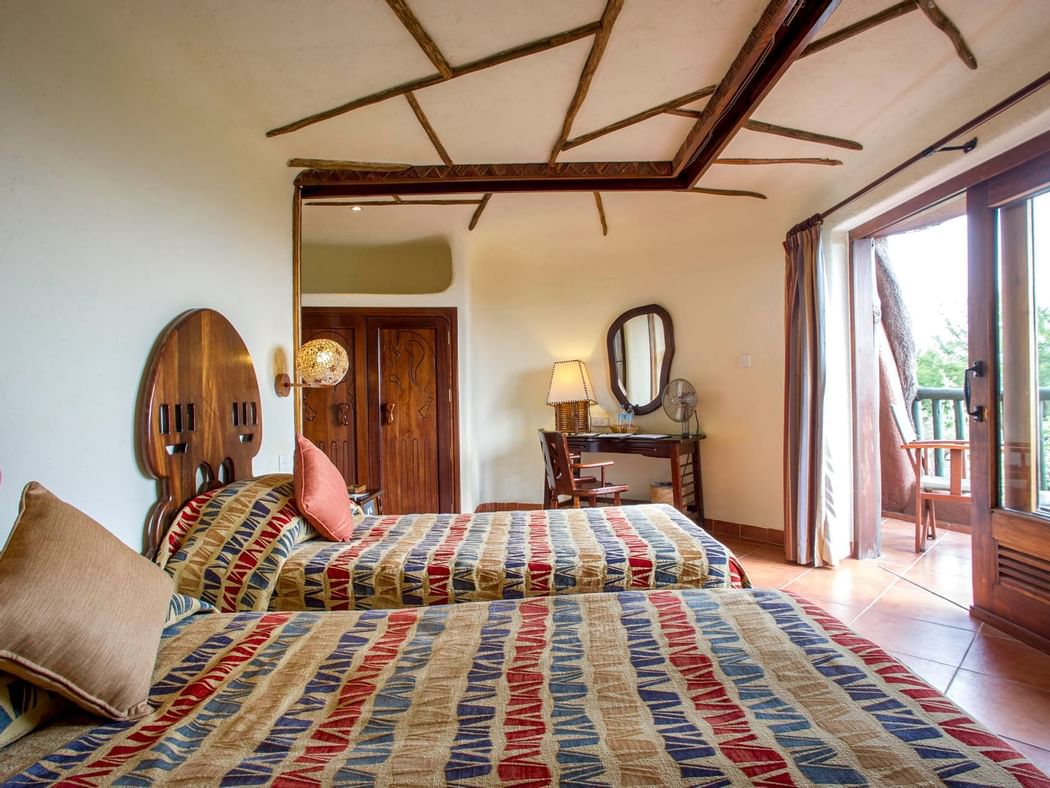
Accommodations in the Serengeti can range from basic camping to exclusive lodges costing more than $10,000/night. Tented camps and lodges can fill quite early in Kogatende (July - September) and Ndutu (February & March). If very short on time, it is possible to squeeze in a fly-in Serengeti safari in 3 days. At least 4 days will be needed if traveling by car. To drive to the northern Serengeti, an absolute minimum of 5 days is needed.
In addition to standard safaris, a balloon safari is also possible. Each balloon holds 12 - 16 people. Departures are daily and the experience runs from 5am- 10am. The actual flying time is one hour. You arrive for a briefing and for the inflation of the balloon. After the flight, there is a picnic breakfast with sparkling wine included. The balloon safari price is $600/person but is a once in a lifetime experience. No night game drives in Serengeti are allowed, but some are available in the neighboring Wilderness Protected Areas. Walking safari options are extremely limited inside of the national park.
Ngorongoro Conservation Area
Along with the Serengeti, Ngorongoro Crater is a destination not to be missed. Named as a World Heritage Site, the NCA is not a national park. Unlike national parks, the indigenous population is still allowed to be in the area but with certain restrictions, balancing preservation, human development and tourism. The highlight is Ngorongoro Crater, the largest unbroken caldera in the world. Winding your way down the 600m walls brings you into an area amazingly dense with animals. Most of the animals here are non-migratory so this is a reliably great destination. It is easier to list what you can't find here rather than all you can find. You will not see topi, gazelle, nor giraffe inside of the crater. It is possible to spot the "Big Five" in just a few short hours. The crater is only open from 6am until 6pm. All people (including Maasai) and vehicles must be out of the crater except during these hours since the environment is fragile. The crater is only 20km in diameter though so all will be seen in the typical 4 - 5 hours inside.
All accommodations are outside of the crater. There is enough elevation-- 2,286m (7,500 ft) at the top if the crater to feel the difference in oxygen and the chill. It also tends to be quite windy at the top so bringing sufficient layers of clothes is important for your comfort. There is a pubic campsite (Simba Campsite) and a number of lodges/tented camps inside of the conservation area. There are many more just to the east of NCA, a few kilometers outside of the boundary. These are good choices except not practical if coming from the Serengeti (west of the NCA). In addition to the daily conservation fee (entry fee $60/person + 18% VAT = $71/person), there is an additional fee for each vehicle that enters into the crater. At $250 + 18% VAT ($295 total) for each vehicle entering into the crater this makes a Ngorongoro Crater safari more pricey than other destinations. All Kasa Trekking & Safaris prices include all park fees, conservation fees, and taxes, so this is already calculated into any price quote. In addition to the crater itself having a restriction of people being out of the crater between the hours of 6pm until 6am each day, the entire NCA itself does not allow entry or exit from 6pm until 6am daily. Being a 5 hours drive from Moshi (3.5 hours from Arusha), this makes a day safari to Ngorongoro Crater possible but a tight schedule and tiring.
There is more to the NCA than the crater itself. On the way from the crater towards the Serengeti is Olduvai Gorge Museum ($30 + 18% VAT admission per person). Here you can learn about the findings of Dr Leakey and his staff. This can be a 1 - 2 hours stopover on the way to/from the Serengeti. There are also some Maasai villages in the area to visit ($20/person). North of Ngorongoro Crater is a smaller crater, Empakai Crater. There is a chance for a short walk with a park ranger here. There is a public campsite near this area.
Mentioned in the Serengeti section, is Ndutu, which straddles the Serengeti and NCA. During January through March, the migration herds wander back and forth in an unpredictable manner between NCA and Serengeti so it is best to have permits for both destinations during this time as their location can change from morning to afternoon or one day to the next. In this area are some nice tented camp options ranging from mid-range to luxury.
Tarangire National Park
This is a beautiful and underrated park with plenty of elephants and giraffe. In fact, Tarangire has among the highest concentration of elephants in Africa. This park is at its best during dry months (January - February, July - October) since the only water source in the area is the Tarangire River which winds its way through the park. This of course draws many animals to the river banks. The landscape is dotted with the massive and unusual baobab trees and huge termite mounds. In addition to the numerous elephants and giraffe, it is possible to find lions, buffaloes, wildebeests, zebras, hippos, various antelope species, impalas, gazelles, leopards, warthogs, monkeys, baboons, ostriches. You won't find rhino and there are almost no cheetah. The park has some nice lodges and tented camps, including some very luxurious ones. There are also some very good tented camps just outside of the park gates that have large numbers of animals wandering through. Selecting a nice accommodation in/near the park, you can spend several days in the area and not be bored at all.
Walking safaris and night game drives are permitted in Tarangire. There is also an option for a balloon safari with details similar to that described in the Serengeti section above.
The park is about 3.5 - 4 hours drive from Moshi, or 2 - 2.5 hours from Arusha, making it a good option for a day trip if you are short of time. Otherwise it pairs well with a trip to the Serengeti, breaking up the long drive.
Lake Manyara National Park
Located along the Great Rift, this park includes the shallow soda lake Manyara. During wet season (March - May, November) this lake hosts many flamingos. The chemistry of the lake is changing so that in drier months there are no longer many flamingos at all. The park is favored greatly by bird watchers, with over over 400 species of birds present. The most numerous animals present include giraffe, zebra, lions, cheetahs, leopards, gazelle, hippos, elephants, impala, baboon and monkeys.
Two-thirds of the park consists of the lake. Night game drives, walking safaris, canoe safaris are all possible. Lake Manyara also has a Treetops Walkway. 370m long, and 18m above the ground you walk over a series of suspension bridges to observe nature. Typically, visitors spend 30 minutes - 1 hour with this activity. The cost of this activity is an additional $30/adult ($15 for children under the age of 12).
There are some good lodges inside of the park, but many more are not far outside of the park in beautiful settings.
Lake Manyara is a 2 hours drive from Arusha (3.5 hours from Moshi) and there is an airstrip very close to the national park.
Arusha National Park
This is a very convenient park to get to, less than one hour drive from Moshi or Arusha. But the park is not heavily visited. It has lovely landscape and contains Tanzania's second highest mountain, Mt Meru. It has large numbers of giraffes and antelopes but lacks lions, elephants, cheetahs, rhinos, and other tourist favorites. Walking safaris are an option here, with a mandatory armed park ranger. And we typically offer this destination as a day trip. Canoe safaris are also an option. Climbing Mt Meru is a lovely trek, typically done in 4 days. For details about this trek, check out our Mt Meru Treks page or click here.
There are no accommodations inside of Arusha National Park except for those trekking Mt Meru but plenty of accommodation options not far outside of the park.
Mkomazi National Park
This park is the opposite direction from Moshi/Arusha than the other parks. Situated 115km (72 miles) southeast of Moshi, it is not easy to pair with other safari destinations. But it makes a good day trip from Moshi (2 hours drive) and there are some "off the beaten path" hiking destinations that can be added in for a multi-day itinerary. Mkomazi is one of the newer national parks in Tanzania as a result is still developing its infrastructure. But it does have a big drawing card in the inclusion of a rhino sanctuary inside of the park. So it is possible to see black rhino up close, guaranteed even. To go inside portion of the park designated as a rhino sanctuary, a morning departure in a park service vehicle with a park guide is required. It is possible to make it as a one day trip but an very early departure from Moshi (around 5am) would be required to be there in time. It would not be possible from Arusha. More practical would be to spend two days at the park with the morning of the second day set aside for the rhino sanctuary. Besides the rhinos, there are a good number of elephants, giraffes, zebras, various antelopes, wild dogs, lions, leopards, cheetahs, hyenas, and buffaloes.
Lake Natron
To the north of Ngorongoro Conservation Area is Ol Doinyo Lengai (mountain of god --translated from the Maasai language). This is an active volcano 2962 m ( 7,650 ft) high that is sacred to the traditional Maasai religion. For geologists this volcano is of special interest due to the unique composition of the lava. This lava is much cooler than any other (but still 600°C). it is not hot enough to give off light in the daytime but emits a dull glow at night. The lava is not thick but instead it is water-like, making it flow very quickly (and dangerously). The molten lava is black in color but solidifies into a white powder. The volcano is quite active and unpredictable. The surrounding area is very desolate, dry, dusty and hot. With daytime temperatures regularly in excess of 40°C (104°F). The mountain can be climbed in half day, but is considered the toughest climb in the country (surpassing Kilimanjaro and Mt Meru). It is steep, covered with loose gravel, dusty, without shade. Gaiters to keep stones out of your shoes are essential, plenty of water must be brought (4 - 5L recommended per person), gloves for scrambling on your hands, bandanna or face mask to filter dust and good sun protection are all vital. The local authorities require climbing with one of their local guides. They do not have any safety training or equipment, very few of them speak any English and some tend to climb at a very fast pace with little regard to your ability to keep up. The climb starts at midnight to avoid the scorching heat of the day. It will be cold at this time so a layer of clothing is important. Most climbers return from the climb at mid morning. We do not recommend this climb but can offer it to you with a liability waiver.
Along the Kenyan border is Lake Natron, a shallow lake with a pH of the water near that of ammonia. Nothing can survive in these waters except an algae highly favored by flamingos. At times several hundred can be seen crowding the shallow waters. A trip to Lake Natron would include walking along the lake shore, hiking at a waterfalls and cultural tourism of the Maasai community. This is truly off the beaten path in a remote, desolate, scorching hot but amazing environment. 1 - 2 days at this destination is sufficient to see all.
Lake Eyasi
This shallow soda lake located to the east of Ngorongoro Conservation area and to the south west of Lake Manyara is home to one of the most fascinating culture tours - a visit to the Hadzabe and Datooga tribes. The Datooga are pastorialists who have also turned to some agriculture. They are a very isolated tribe, resisting outside influence and education. Only 5% speak Swahili and their literacy rate is at 1%. They are skilled craftsmen and are experts at melting scrap metal and molding arrowheads and knives which they trade with the Hadzabe tribe. Outside of this interaction, they are not a friendly tribe towards outsiders typically but will welcome your visit with a local guide. In the past young Datooga warriors would improve their status by killing any outsider. Fortunately this no longer is the case. They are a shy tribe but, when escorted by a local guide, welcomes visitors.
The Hadzabe (Hazda) are one of the last true hunter-gatherer tribes left in the world. They love their lifestyle and have completely rejected government attempts to assimilate them into modern society. Free houses and schools were left abandoned as they quickly returned to their traditional ways. They are very opportunistic, hunting anything with bow and arrow from mice to giraffe, with baboon being their favored prey. For large prey they use poison tipped arrows. Their dwellings are very primitive and temporary to the extent that if a large animal such as a giraffe is killed, they will move to the kill site rather than bring the animal to their camp. Since their huts of sticks, mud and leaves can be built in a few hours. They are experts at gathering wild honey and foraging for edible roots and berries. You can accompany them on a hunt, learn how to make fire without matches, compare your archery skills and join them in dance. They are a very friendly tribe.
The surrounding area is a very harsh environment with onion farming being the mainstay. We can arrange a visit to one of the small farms for an insight into the local life of the inhabitants.
Safari Accommodations
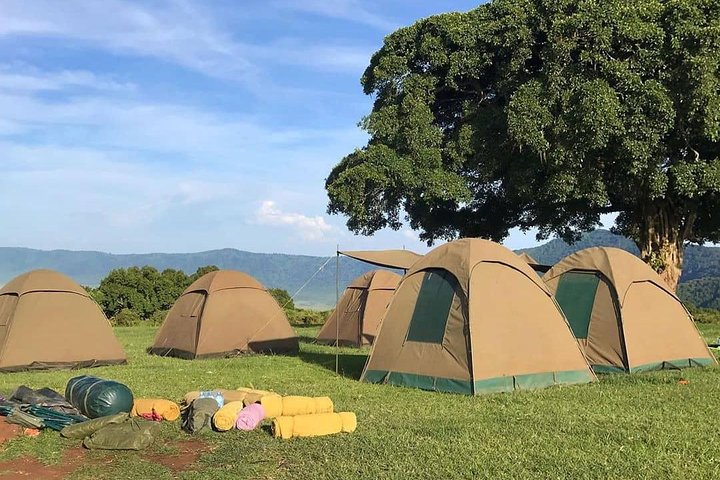
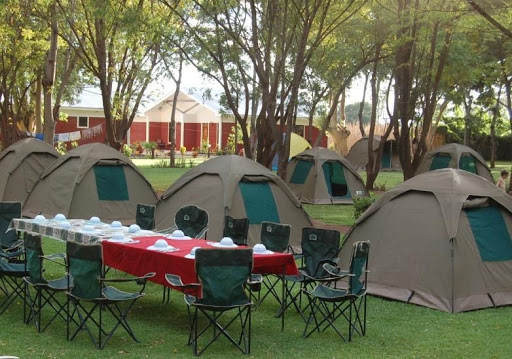
Sample Safari Itineraries
Below are some of the most commonly requested itineraries. For variations of these or for longer itineraries, we will be happy to work together to create the ideal itinerary for you. There are also options for flying by small plane into/out of safari destinations such as northern Serengeti, central Serengeti, southern Serengeti. In addition, there are flights from central Serengeti to Zanzibar available.
Day 1 – Tarangire National Park
After breakfast at your hotel in Moshi/Arusha, your safari guide will pick you up and drive you to Tarangire
National Park. This park is most known for its large concentration of elephants and giraffes. But is also has most of the
common safari animals present. Not found are rhino here and it will be unlikely that cheetahs are spotted here. The
landscape dotted by huge baobab trees and enormous termite mounds makes this destination uniquely beautiful. This park
is excellent year round, but especially during the driest months (January, February, July, August, September, October) when
the only water source is the Tarangire River which winds its way through the park. A picnic style lunch will be had inside the
park at a designated area and gme viewing will continue until late afternoon. At this time we will exit the park and travel
west near the town of Karatu for dinner and overnight rest. Note that this night will not be in a wildlife area. This is
because the drive from Tarangire to Serengeti the next day is quite long and it is best to travel close to Ngorongoro Conservation Area (NCA) this day to reduce the driving time the next day.
The gates to enter the NCA close at 6pm, making it impractical for overnight inside the NCA since we would be cutting your time in Tarangire short. Sleeping in the wildlife areas
is a wonderful experience but you will get that opportunity the other nights of this itinerary.
Day 2 – Serengeti National Park
After breakfast at your accommodations, we will drive west, passing through the NCA (but not through the crater).
Inside the NCA we will stop at a scenic viewpoint overlooking the famous crater which we will descend into on the last day.
We continue west for a few hours until we reach the border of the Serengeti. The best game viewing will be further inside the
Serengeti, in the Seronera portion (central) of the Serengeti. You will get game viewing in until late afternoon when we will
arrive at your accommodations where you will have dinner and overnight rest.
Day 3 – Serengeti National Park
This day is all about enjoying the Serengeti. The park is very large and your guide will know which portion to visit for the
best game viewing for that time of the year. During the day's game drive we will pause for a picnic style lunch at a designated
spot then continue with game viewing until late afternoon. We then return to the same accommodations as the previous night.
Day 4 – Serengeti - NCA
We will get a chance for some last views of the Serengeti as we work our way east. Our park permit will be for 48 hours maximum
inside the Serengeti, so we will time our arrival at the entry gate of Ngorongoro Conservation Area to be before that time. The gate
will be a good spot to pause for our lunch before we continue to drive east. There are two possible side trips along the way.
One is a visit at a Maasai Village (additional charge of $25/person) and the other is a visit at Olduvai Gorge Museum (additional
Charge of $35/person - permits for this need to be purchased by us in advance). We will drive to near the Ngorongoro Crater where
your evenings accommodations will be for relaxation, dinner and sleep. Note that there are no accommodations inside of Ngorongoro
Crater. Above the crater is a cold location and windy. The altitude rises to 2400m (over 7,850 ft) here, so it is wise to bring warm
clothes. Even a knit cap and light gloves might feel welcome.
Day 5 - Ngorongoro Crater - Arusha/Moshi
The best game viewing inside of the crater is early morning. The gates to descend into the crater open at 6am. We will have an
early breakfast and descend down the 600m high crater walls to one of the best safari destinations in the world. What makes this
one of the best is the sheer number of animals inside the crater and the variety of animals present. Excepting for a lack of giraffe
and oryx (a large antelope), all African plains wildlife is present, including the near extinct black rhino. We will pause for a
picnic lunch at a designated spot near a pool of water frequented by hippos and flamingos. The game viewing is excellent but
the crater is not very large, just 20km in diameter. So in 4 - 5 hours all will be seen. We then ascend out of the crater and
drive to Arusha/Kilimanjaro Airport/Moshi to end the safari. Included meals for this day are breakfast and lunch. Accommodations
for this night is not included in the quoted price.
2025 - 26 Prices - 5 Days Safari Tarangire, Serengeti & Ngorongoro Crater
All prices are listed in USD per person based on Basic Camping Accommodation. For Lodge/Tented Camp safaris, contact us for a price quote.
1 Participant - $2330 | 2 People - $1630 | 3 People $1250 | 4 People $1200 | 5 People $1150
Price Includes:
Transportation starting at hotel in Moshi/Arusha with customized safari vehicle with pop-up game viewing roof
Camping tent and sleeping bag
All park fees and taxes
Meals and drinking water
Sleeping Tents, Folding Chairs, Sleeping Mattress
English speaking guide (contact us if your preference is another language)
Guide and Cook
Price Excludes:
Flights to/from Kilimanjaro Airport
Transfers from Airport to Hotel
Accommodations before or after the safari
Tourist Visa
Guide and Cook Tip
Medical Insurance (optional)
Activities not mentioned in this itinerary or listed as optional
Note: Tents are double occupancy.
There is a substantial discount for youths under the age of 16 years old, East African Citizens, and Tanzanian Resident
Permit Holders (Class A, B or C Permits). Let us know if any of your participants fall into one of these categories.
Book This Trek info@kasatrekkingandsafaris.com
Day 1 – Lake Manyara
After breakfast at your hotel in Moshi/Arusha your safari guide will pick you up and you will go to Lake Manyara
National Park. Most likely even before you arrive inside the park gates you will be greeted by troops of baboons and perhaps
some elephants and antelopes as well. This is a lovely park with Lake Manyara covering 2/3 of the area. It is a shallow alkaline
lake where an algae thrives which is favored by flamingos. There is a good chance of seeing elephants, giraffes, monkeys,
baboons, antelopes, lions (look in the tree branches for them), pythons, buffaloes, ostriches, zebras, among other animals. There
is an option of going on the Manyara Treetop Walkway. See the details of this side trip here.
The land portion of this park is not that large so in half day, all will be seen. At that time we will drive into Ngorongoro
Conservation Area (NCA) to go to our accommodations inside of a wildlife area (but not inside of the famous crater). Having
overnight here is more expensive than sleeping outside of the NCA (If you are an a tight budget we can arrange this.) but
spending overnight inside of a wildlife area is a memorable experience. This also cuts our drive time down the next day. Note
that the gate to enter the NCA shuts at 6pm each day, so we will have to leave Lake Manyara with enough time to reach the NCA Gate
before this time.
Day 2 – Serengeti National Park
After a relaxing breakfast at your accommodations we start our drive across the NCA. You might see some animals along the way
but it wont be the best game viewing - not like the crater which will be experienced on day four. We will stop along the way
to visit a Maasai Village. From there we continue, reaching the western border,
we cross into the Serengeti. This is a huge park and we will head into the Seronera portion of the park (central Serengeti).
Depending on the time of the year you may encounter the migration herds along the way. Seronera is a reliably good safari
destination any time of the year. It is possible to spot any of the African plains safari animals inside of this area, including
black rhino. We will continue game viewing until the late afternoon when we will travel to your night's accommodations inside of
the park.
Day 3 – Serengeti to NCA
We will wake up early and have breakfast before heading out for some game viewing. We will be working our way eastward, needing to
exit the park within 24 hours of our entry. We then reenter the NCA. We will be driving to near the crater rim. We won't be
in a hurry, so there is an option of a side trip to visit Olduvai Gorge Museum. To learn the details of this option, click here.
We arrive at your accommodations with time for you to relax and enjoy a nice dinner. Note that there are no accommodations inside of Ngorongoro
Crater. Above the crater is a cold location and windy. The altitude rises to 2400m (over 7,850 ft) here, so it is wise to bring warm
clothes. Even a knit cap and light gloves might feel welcome. It is possible for the wind chill ratings to be at 0° C.
Day 4 – Ngorongoro Crater
The gate to descend into the crater opens a 6am. The best game viewing will be early, so it is best to wake up and have breakfast
early. After going through the registration at the crater gate, we descend 600m down along a steep, winding road. The crater is
steep enough that most animals do not leave the crater. The variety and sheer number of the animals is astounding. Except for
giraffes and oryx, all African plains safari animals can be found here. The animals here are not as shy as in some destinations
and that fact along with the beautiful backdrop of the majestic crater walls, makes wildlife photography here excellent. We will
pause for a picnic style lunch at a designated area near a pool of water frequented by hippos and flamingos. The crater is not
large, just 20km in diameter, so in 4 - 5 hours all can be seen. We will then ascend out of the crater and drive you to wherever
you like in Arusha/Kilimanjaro Airport/Moshi for the end of your safari. Dinner and accommodations for this day are not included
in the quoted price, but we can certainly arrange these for you at your request.
2025 - 26 Prices - 4 Days Safari Tarangire, Serengeti & Ngorongoro Crater
All prices are listed in USD per person based on Basic Camping Accommodation. For Lodge/Tented Camp safaris, contact us for a price quote.
1 Participant - $1900 | 2 People - $1275 | 3 People $985 | 4 People $960 | 5 People $910
Price Includes:
Transportation starting at hotel in Moshi/Arusha with customized safari vehicle with pop-up game viewing roof
Camping tent and sleeping bag
All park fees and taxes
Meals and drinking water
Sleeping Tents, Folding Chairs, Sleeping Mattress
English speaking guide (contact us if your preference is another language)
Guide and Cook
Price Excludes:
Flights to/from Kilimanjaro Airport
Transfers from Airport to Hotel
Accommodations before or after the safari
Tourist Visa
Guide and Cook Tip
Medical Insurance (optional)
Activities not mentioned in this itinerary or listed as optional
Note: Tents are double occupancy.
There is a substantial discount for youths under the age of 16 years old, East African Citizens, and Tanzanian Resident
Permit Holders (Class A, B or C Permits). Let us know if any of your participants fall into one of these categories.
Book This Trek info@kasatrekkingandsafaris.com
Day 1: Ngorongoro Crater
Your day starts early with a breakfast from the hotel, followed by your guide picking you up and driving to Ngorongoro
Conservation Area (NCA). We will proceed into Ngorongoro Crater for a game drive. Most tour companies go on moring game drives
here, so the crater will not have as many vehicles inside for our afternoon game drive. The animals become mmore active late in
the afternoon with predators starting their hunts. The number and variety of animals here is excellent but in addition, the
crater itself is very beautiful. The crater is not large though, so by the required exit time of 6pm, when the road gates close,
we will have seen all. From there we will go to your evening's accommodations inside the NCA for dinner and overnight rest. Note that overnights are not allowed inside of the crater so all accommodations are outside of the crater.
Day 2: NCA - Serengeti
You will wake up to the sounds of nature. Perhaps you heard some animals during the night. After you enjoy a good breakfast,
we will start our drive across the rest of the NCA (but not through the crater), about 4 hours long until we reach
Serengeti National Park. We will head for the Seronera portion of the park - located in central Serengeti. This area has
reliably good game viewing throughout the year and is home to many of the big cat species - lions, cheetahs, leopards.
All the African plains safari animals are present here including black rhino. We will continue game viewing until late afternoon,
at which time we will go to our accommodations inside of the park. Here you will have a relaxing and delicious dinner and
a good night's sleep.
Day 3: Serengeti to Lake Eyasi
Today is a good idea to wake up early and have a quick breakfast before we get some more game viewing in. We will work our way
east, exiting the Serengeti before our 24 hour permit elapses. We then drive across the NCA, exiting on the western side and
then drive to the remote Lake Eyasi. This is an extremely salty and shallow lake - with an average depth of 1m. There will not
be any real wildlife in this immediate area, but it is a good area to see rural Tanzanian life. We will go to our evening's
accommodations for dinner and overnight. You will want an early bedtime because the next day we will be up before the sun.
Day 4: Hadzabe
We will wake up before dawn and grab a quick bite and cup of tea/coffee before heading out to catch up with the Hadzabe tribe.
Of the more than 120 tribes located in Tanzania, the Hadzabe stand out due to their beloved lifestyle. They are one of the last
true hunter-gatherer tribes left in the world. Using bow and arrow, they are very opportunistic in their hunting, with anything from mice
to giraffe being their prey. Baboon is their favored meat. For large game they use poisoned tipped arrows to bring a quick death.
Their huts are built so basically, that if they kill a large animal such as a giraffe, they will relocate their residence rather
that try to bring the animal to their huts. They are experts in gathering wild honey and foraging for edible tubers. They are
also very educated in natural medical remedies and are in good health. Their language is unique in Tanzania, incorporating
tongue clicks. After the hunt, you will get a chance to join them in singing and dancing as well as trying your skill at archery
and creating a fire without matches. Afterwards, we will return to the accommodations for a brunch before departing for
Arusha/Kilimanjaro Airport/Moshi for the end of the itinerary.
Book This Trek info@kasatrekkingandsafaris.com
Day 1: Tarangire
After breakfast at your hotel, your guide will pick you up and we will drive to Tarangire National Park. This is a beautiful and
underrated park. The beauty is in the Tarangire River winding its way through the park, with animals gathering along the river
banks, the huge and unusual baobaab trees dotting the landscape, and the giant termite mounds. This park is best known for its
large numbers of elephants and giraffes, but most of the safari animals are present here, excepting rhino. The terrain is not
the best for spotting cheetahs either, since they prefer a more open area where they can beter utilize their speed. We will
spend time viewing game until late afternoon when we will go to our overnight accommodations. Some of the accommodation
choices are inside of the park, and some are outside of the park but in areas with a large number of animals.
Day 2: Tarangire - Ngorongoro Conservation Area
This day there is an option of an early morning game drive before returning for breakfast, or you may choose to have
breakfast first before heading out for some game viewing. We will time the game drive so we can exit the park before the
expiration of our 24 hours permit. We then drive west, to the village of Mto wa Mbu for a walking village tour. You will
get a chance to see the life of a variety of people, visiting an rice farm, a banana farm, a market, and seeing woodcarvers.
We will have a lunch here and you have the option of tasting mbege - a locally made banana beer common in the villages. From there
we continue to drive west, entering Ngorongoro Conservation Area (NCA) - but not into the crater this day. We must get to the
NCA entry gates before they close at 6pm. We then go your evening's accommodations inside the NCA for dinner and overnight rest.
You may be surprised at how cold and windy it can be at this location. With an elevation of 2400m (over 7,850 ft) it is
wise to bring warm clothes. Even a knit cap and light gloves might be used.
Day 3: Ngorongoro Crater - Arusha/Kilimanjaro Airport/Moshi
After an early breakfast, we register at the Ngorongoro Crater Gate then drive along a steep, winding road, descending 600m
down to the crater floor. This is one of the most highly rated safari destinations in Africa. This is because of the
beauty of the crater, the large variety of animals present, and the sheer number of animals living inside of the crater.
This is one of only a few destinations where the "Big 5" - elephants, buffalo, black rhino, lions, and leopards can be spotted
wihin a few hours time. We will pause for a picnic style breakfast at a designated location, overlooking a body of water
frequented by hippos. Ngorongoro Crater is not a large safari destination though, so in 4 - 5 hours of game viewing all will be
seen. At that time, we will ascend out of the crater and drive back to Arusha/Kilimanjaro Airport/Moshi to end the itinerary.
Dinner for this night and overnight accommodations are not included in the quoted safari price but we are happy to make
arrangements for this if you like.
2025 - 26 Prices - 3 Days Safari Tarangire & Ngorongoro Crater
All prices are listed in USD per person based on Basic Camping Accommodation. For Lodge/Tented Camp safaris, contact us for a price quote.
1 Participant - $1500 | 2 People - $960 | 3 People $785 | 4 People $720 | 5 People $650
Price Includes:
Transportation starting at hotel in Moshi/Arusha with customized safari vehicle with pop-up game viewing roof
Camping tent and sleeping bag
All park fees and taxes
Meals and drinking water
Sleeping Tents, Folding Chairs, Sleeping Mattress
English speaking guide (contact us if your preference is another language)
Guide and Cook
Price Excludes:
Flights to/from Kilimanjaro Airport
Transfers from Airport to Hotel
Accommodations before or after the safari
Tourist Visa
Guide and Cook Tip
Medical Insurance (optional)
Activities not mentioned in this itinerary or listed as optional
Note: Tents are double occupancy.
There is a substantial discount for youths under the age of 16 years old, East African Citizens, and Tanzanian Resident
Permit Holders (Class A, B or C Permits). Let us know if any of your participants fall into one of these categories.
Book This Trek info@kasatrekkingandsafaris.com
Day 1:
After breakfast at your hotel, your safari guide will pick you up and drive to Lake Manyara for game viewing. Before even
arriving inside of the park, there is a fair chance that you might see baboons, monkeys, maybe even elephants and giraffes
as you get close to the park. Once inside the park, we will get in as much game viewing as possible. The park has 2/3 of its
area covered by Lake Manyara. The lake is favored by flamingos and hippos. Most likely you will find elephants, giraffes,
ostriches, various antelope varieties, buffalo, warthogs, zebras, and cheetahs. You might even find pythons, leopards, and
lions sleeping in the tree branches. You will have a picnic style lunch and the game viewing will go until mid afternoon when
we will exit to travel inside of Ngorongoro Conservation Area (NCA) before their gates close at 6 pm. Our accommodations will
be inside of the NCA (but not in the crater). It is less expensive if you are not staying inside of the NCA, but experiencing
and "in the wild" night where you might hear animals wandering around is an experience that will be memorable. Nights are cold at this
elevation and it tends to be windy as well. Be sure to bring warm enough clothes, even a knit cap and light gloves. If you are on a
tight budget or for others reason would rather stay outside of the NCA, can arrange that too. There will not be wildlife present
at accommodations outside the NCA.
Day 2: Ngorongoro Crater - Arusha/Kilimanjaro Airport/Moshi
After an early breakfast, we will register at the Ngorongoro Crater Gate then travel a steep and winding road, descending
600m to the crater floor. The crater is only 20km in diameter but you will be amazed at the number and variety of animals
present. It has been likened to a "safari highlight film". In 4 - 5 hours of game viewing all the roads in the crater will
be covered but during that time you can possibly see all of the "Big 5" - lions, elephants, black rhinos, buffaloes, and leopards.
Inside of the crater the only African plains safari animals not present are giraffes and oryx (a large antelope). There will
be a picnic style lunch at a designated picnic spot near a pool of water typically filled with hippos. In the afternoon, we
will ascend out of the crater and travel to Arusha/Kilimanjaro Airport/Moshi to end the itinerary. Dinner and overnight
accommodations for this night are not included in the price quote but we can make arrangements for these at your request.
2025 - 26 Prices - 2 Days Safari Lake Manyara & Ngorongoro Crater
All prices are listed in USD per person based on Basic Camping Accommodation. For Lodge/Tented Camp safaris, contact us for a price quote.
1 Participant - $1100 | 2 People - $680 | 3 People $550 | 4 People - $500 | 5 People $470
Price Includes:
Transportation starting at hotel in Moshi/Arusha with customized safari vehicle with pop-up game viewing roof
Camping tent and sleeping bag
All park fees and taxes
Meals and drinking water
Sleeping Tents, Folding Chairs, Sleeping Mattress
English speaking guide (contact us if your preference is another language)
Guide and Cook
Price Excludes:
Flights to/from Kilimanjaro Airport
Transfers from Airport to Hotel
Accommodations before or after the safari
Tourist Visa
Guide and Cook Tip
Medical Insurance (optional)
Activities not mentioned in this itinerary or listed as optional
Note: Tents are double occupancy.
There is a substantial discount for youths under the age of 16 years old, East African Citizens, and Tanzanian Resident
Permit Holders (Class A, B or C Permits). Let us know if any of your participants fall into one of these categories.
Book This Trek info@kasatrekkingandsafaris.com
Prices will vary according to the time of the year of travel, number of people in your group, and overnight accommodations (basic camping, tented camps & lodges of various price categories). Discounts are available for East African Citizens, Residence Permit Holders (Class A, B or C), and for children under the age of 16 years old.
Contact Us
We are ready for your visit! For price quotes/bookings or for further information, we can be contacted at:
+255 764 022 044
info@kasatrekkingandsafaris.com